GUIDE · 2026-08-09
Wheat vs Rice Tteok for Tteokbokki — Fresh, Frozen, Thickness
By Tteokbokki Curator
Wheat-mix tteok stays chewy on a street cart; rice tteok puffs softer at home. How to read the bag, soak, and time by thickness.
TL;DR
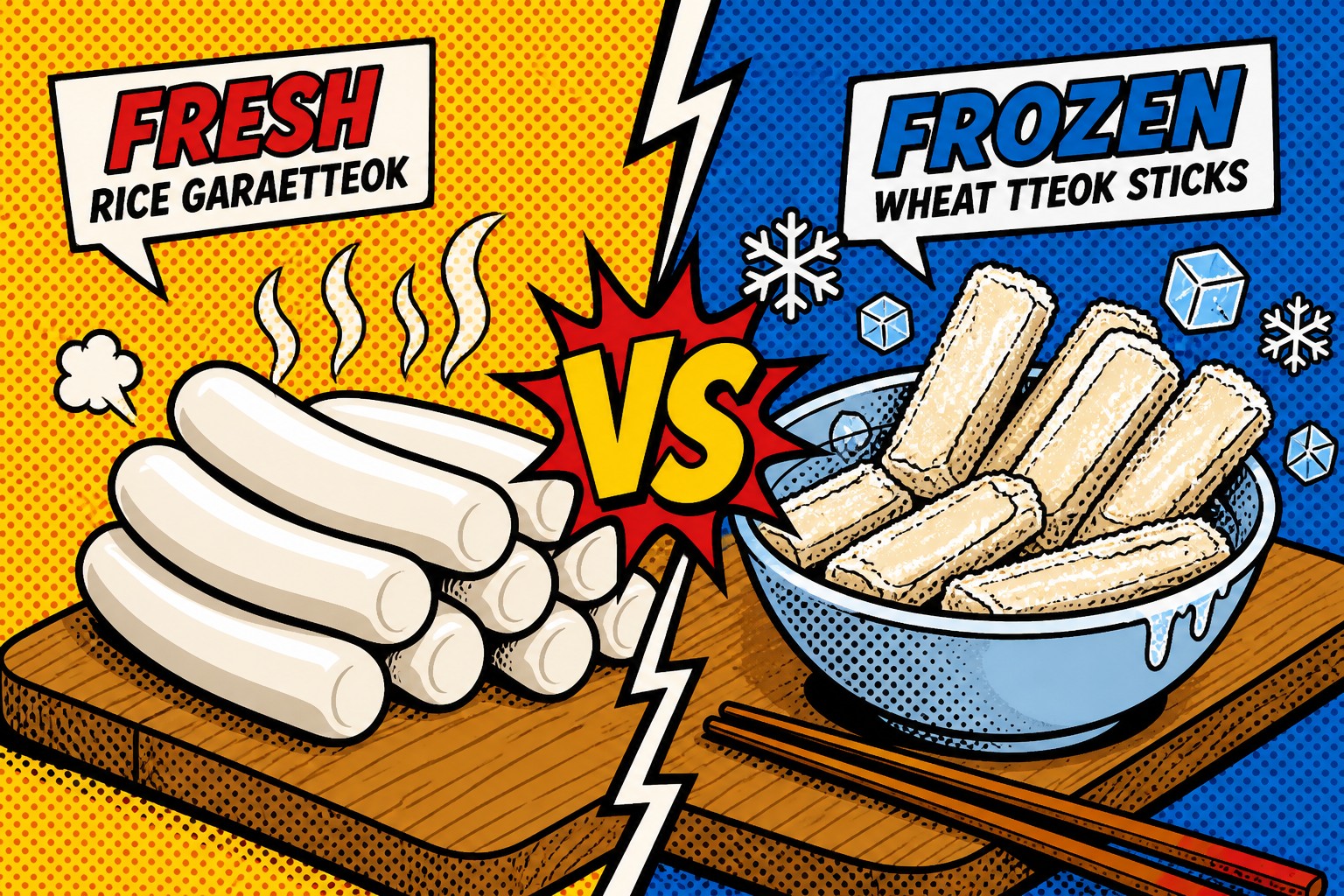
Pure rice garae is tender and swells fast. Wheat-mixed tteok stays springy through a long simmer. Fresh, refrigerated, and frozen are a second axis — soak by dryness, do not mix thicknesses in one pot. The longer shopping essay is /blog/wheat-vs-rice-tteok-for-tteokbokki/.
Korean rice cakes are not interchangeable. Pure short-grain rice garae is tender, pillowy, and swells quickly; wheat-mixed garae (mil-tteok) is chewier and springier, favored by many street vendors because it resists overcooking during long service. Both are authentic — pick by chew preference.
Fresh tteok from a market steamer is supple and slightly tacky; refrigerated shelf tteok is firmer and needs soaking; frozen tteok is driest and needs the longest soak and a gentler initial simmer so the outside does not slough off before the core hydrates.
Thickness tells time. Thin 0.8 cm sticks cook in 6–8 minutes; thick 1.2 cm king tteok needs 10–14 minutes and a little more stock. If you mix thicknesses in one pan, stagger entry — thick coins go in first, thin sticks join halfway, otherwise half your pan goes mushy before the rest cooks.
Oil-coated tteok (some vacuum packs) resists sauce adhesion. Rinse that light oil off with warm water after soaking so the sauce can cling; pat dry, then braise. The slight rinse loses nothing while gaining gloss.
Source note: tteok.ai and dduk.ai dive deeper into rice science; here we care about tteok as a braising sponge. Cook a taste coin before committing the batch — bite it at 8 minutes and at 12 to learn your bag's curve.
More Korean food
Relevant pages on the two hub sites — recipes and a BBQ directory on bulgogi.ai, street rice cakes on tteokbokki.ai.
- bulgogi.ai — recipes & BBQ directory →Marinades, cuts, and a USA Korean BBQ map.
- Rice-cake storage (tteok.ai) →Fresh vs refrigerated vs frozen garae — before you set the sauce.