GUIDE · 2026-09-24
Wheat vs Rice Tteok: What to Buy for Tteokbokki
By Tteokbokki Curator
A deeper look at the search that already lands here: wheat-mix cakes stay chewy on a cart; rice cakes puff softer at home.
TL;DR
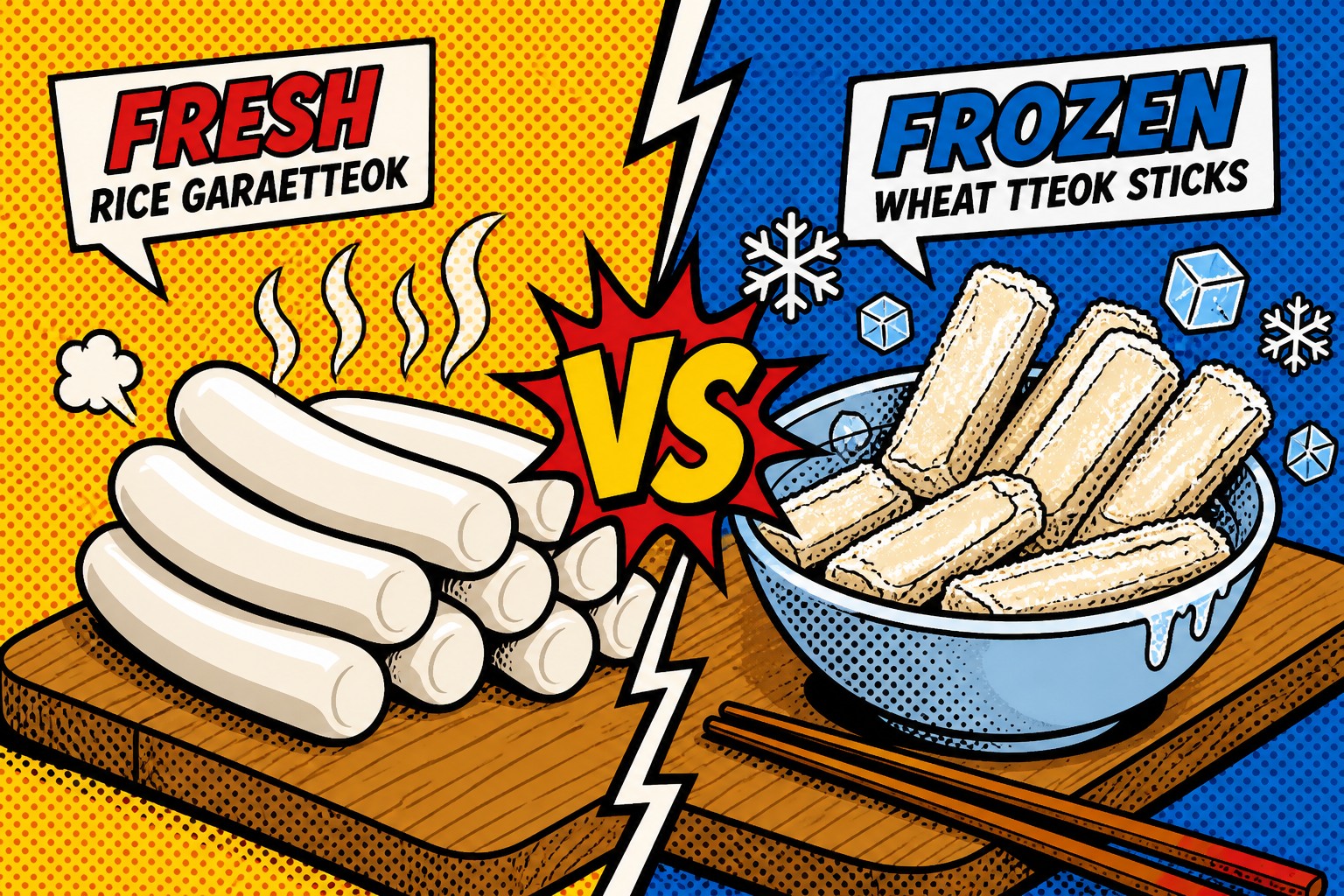
Pure rice garae is tender and swells fast. Wheat-mixed tteok (mil-tteok) stays springy through a long simmer. Read the ingredient line, soak by dryness, and do not mix thicknesses in one pot. This page extends the shorter types post — it does not replace it.
The query “wheat vs rice tteok” already finds this site at /blog/garae-tteok-types-fresh-frozen-wheat-vs-rice/. That post is the map. This one is the shopping and cooking decision: what to put in a tteokbokki pot tonight, and why street carts and home cooks quietly disagree.
Rice cakes for tteokbokki are usually garae-tteok — extruded cylinders. “Rice” on a package can still mean a blend. Pure short-grain rice tteok tastes mildly sweet and goes pillowy as it takes on sauce. Wheat-mixed tteok adds wheat flour (and sometimes tapioca) so the cylinder has more snap and survives sitting in a shallow pan for an hour of service. Both are sold as tteokbokki tteok. Neither is a counterfeit of the other.
How to read the bag without a Korean-language exam. Look at the ingredient order, not the front photo. If rice is first and wheat is absent, you have a softer, faster-swelling cake. If wheat flour appears high on the list, expect chew that holds. Some vacuum packs are oil-coated so pieces do not glue together; rinse that film after soaking or sauce will slide off. Thickness is printed less often — compare with your finger. Thin sticks (about the width of a pencil) cook in a short simmer; king sticks need more stock and more time.
Fresh, refrigerated, and frozen are a second axis, independent of wheat vs rice. Fresh market tteok is already hydrated and can tear if you boil it hard. Refrigerated shelf tteok is firmer and wants 15–20 minutes in warm water. Frozen tteok is driest: soak longer, start in a gentler simmer, and do not dump it into a raging boil or the outside sloughs before the core hydrates. Everyday shop handling also lives on https://tteok.ai/blog/everyday-tteok-garae-vs-garaetteok-soup-shop/ and the freezer science post https://tteok.ai/blog/frozen-vs-fresh-tteok-storage/.
Street logic vs home logic. A cart keeps one pan going and sells cup after cup. Wheat-mix cakes forgive that. A home cook usually makes one pot and eats it immediately. Rice tteok can be the better bowl at home because you taste the grain and the sauce clings to a softer surface. If you meal-prep or expect leftovers, wheat-mix or a slightly underdone rice cake is kinder the next day. Leftover tteokbokki always firms as starch retrogrades; that is physics, not a bad brand.
Soak, then taste a coin. Keep one piece back, simmer it in plain water or a ladle of stock, and bite at 6, 8, and 10 minutes. Chalky center means more time or a longer soak, not more gochujang. Mushy edges with a hard core means the heat was too high at the start. This one-coin test teaches your specific bag faster than any generic timer.
Sauce thickness should follow the cake, not the other way around. Soft rice tteok sheds starch quickly and will thicken a pot on its own — pull the pan while the sauce still looks slightly loose. Wheat-mix sheds less and may want a minute more reduction or a tiny starch slurry if you used a very lean stock. The sauce essay is /blog/tteokbokki-sauce-gochujang-balance/. Do not fix a chalky cake by adding sugar.
Gluten notes, because people ask. Wheat-mix tteok is not gluten-free. Pure rice tteok usually is, but check the line for wheat starch or a shared fryer if that matters in your kitchen. Gochujang and soy in the sauce are separate gluten questions; use a wheat-free soy if you need the whole bowl to be. We are not labeling medical diets from a grocery photo.
When the craving is not tteokbokki at all. Soup slices (tteokguk-tteok) are ovals meant to swell in a clear broth — different cut, different hydration, covered on https://tteok.ai/ and in heritage language on https://dduk.ai/blog/science-and-art-of-rice-cakes-glutinous-vs-nonglutinous/. Songpyeon and injeolmi are not braising sponges. If you landed here from a Chuseok search, go to https://dduk.ai/blog/songpyeon-vs-mochi/ instead of forcing dessert rice into a gochujang pot.
A practical shopping default for this site’s recipes. For /recipes/classic-school-tteokbokki/ and /recipes/rabokki-ramen-tteok/, wheat-mix or a firm refrigerated rice cake is the cart texture. For /recipes/rose-tteokbokki-cream/ and /recipes/cheese-tteokbokki-school/, either works; cream hides a little overcook. For /recipes/gungjung-tteokbokki-royal-soy/, a milder rice cake lets soy and sesame show. For /recipes/mala-tteokbokki/, use a cake that can stand heat without dissolving — wheat-mix or thick rice.
Do not mix a leftover handful of thin sticks with a new bag of king cakes unless you stagger the entry. The thin pieces will be porridge while the thick ones are still white inside. Cut king cakes on a bias if you must combine, or simmer the thick ones five minutes first.
If you only remember one line: wheat vs rice is chew, fresh vs frozen is soak, thickness is time. The older types post stays the glossary. This post is the decision. Cook the sauce on this hub; store the bag with the advice on tteok.ai; save ritual cakes for dduk.ai.
Labels you will actually see. “Tteokbokki tteok,” “rice cake stick,” “cylinder rice cake,” and “garaetteok” are the same job with different English. “Mochi rice cake” on a US bag is often glutinous dessert cake — wrong chew for a long simmer. “Tteokguk slices” are ovals; they swell into soup, not into a glossy street sauce. If the only English on the bag is “rice cake” and a cartoon grill, read the ingredients and the shape. Cylinders go in this pot. Half-moons and coated cubes do not.
Oil film and starch dust. Vacuum packs sometimes coat pieces so they do not glue in the bag. That film keeps sauce from clinging until you rinse after the soak. Fresh market tteok can have a light rice-flour dust for the same reason; a rinse is enough. Do not scrub. Do not soak in hot water “to go faster” — the outside cooks and the core stays chalky, the same failure as a hard boil from frozen.
A leftover plan that matches the cake. Wheat-mix leftovers reheat in a skillet with a spoon of water and stay springy. Soft rice leftovers are better the next day as a shallow pan-fry or folded into a cheese bake than as a second wet pot. If you know you will have leftovers, undercook by a minute and hold sauce separately. The make-ahead post is /blog/make-ahead-freezer-tteokbokki-meal-prep/. This page is only what to buy and how to hydrate it.
More Korean food
Relevant pages on the two hub sites — recipes and a BBQ directory on bulgogi.ai, street rice cakes on tteokbokki.ai.
- bulgogi.ai — recipes & BBQ directory →Marinades, cuts, and a USA Korean BBQ map.
- Rice-cake storage (tteok.ai) →Fresh vs refrigerated vs frozen garae — before you set the sauce.