RECIPES · 2026-10-05
How to Make Tteokbokki at Home — Street-Cart Method
By Tteokbokki Curator
The first-time tteokbokki method: what to buy, how long to soak, the sauce ratio, and when the pot is done. Homemade street-cart spicy rice cakes.
TL;DR
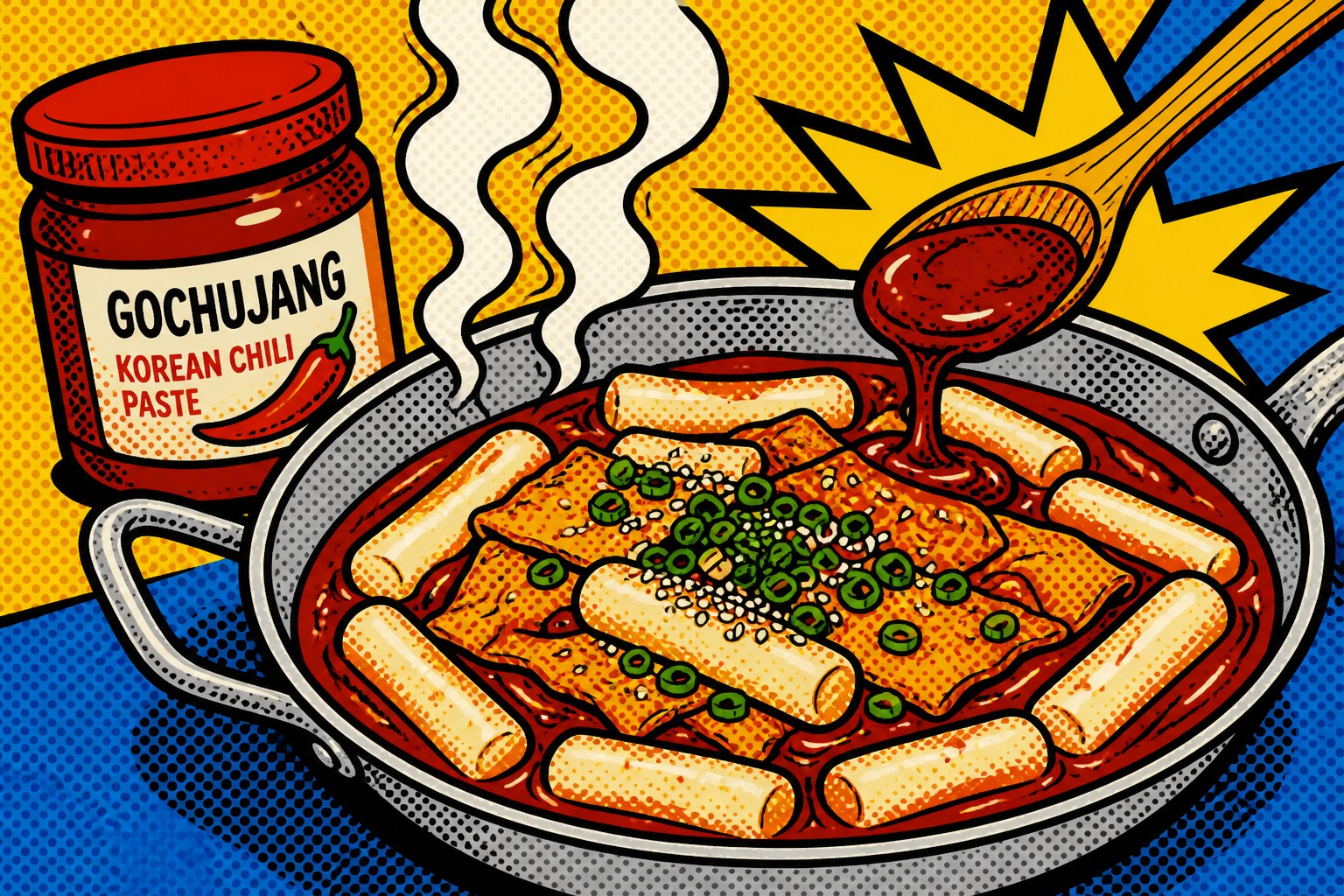
Soak 400 g thin garae-tteok. Simmer 2 cups anchovy-kelp stock with 3 Tbsp gochujang, 1 Tbsp gochugaru, 2 Tbsp soy, and 2 Tbsp rice syrup. Add the cakes 8–12 minutes until they puff and the sauce clings. Fish cake and scallion last. The short card is /recipes/classic-school-tteokbokki/.
“How to make tteokbokki” and “tteokbokki recipe” are the searches this site exists for. The dish is chewy rice-cake cylinders in a sweet-spicy gochujang sauce, usually with fish cake, usually eaten fast. It is not a stew you walk away from. It is not a pasta. If you want the short card, use /recipes/classic-school-tteokbokki/. If you want the first-time method — shopping, soak, stock, sauce, doneness — stay here.
Buy cylinder rice cakes labeled tteokbokki tteok or garae-tteok, not soup ovals and not dessert mochi. Thin sticks (about a pencil) are the school-cart chew and cook in a short simmer. King sticks need more stock and more time. Wheat-mix cakes stay springy if the pot sits; pure rice cakes puff softer and thicken the sauce faster. That decision is /blog/wheat-vs-rice-tteok-for-tteokbokki/. For tonight, either works if you soak them.
Soak is not optional. Refrigerated cakes want 15–20 minutes in warm water. Frozen cakes want closer to 30. Fresh market cakes may only need a rinse. A cake that still snaps like chalk in the center after a soak will still snap after a sauce simmer — you cannot fix hydration with more paste. Bite a spare coin at 8 minutes in plain water if you have never used this bag.
Stock is the difference between “spicy ketchup” and cooking. Simmer a handful of dried anchovies (guts pulled if they are large), a square of kelp, and a dried shiitake in about two and a half cups of water for 12–15 minutes, then strain. You need about 2 cups of that liquid for 400 g of cakes. The timing and the vegetarian swap live on /blog/fish-cake-eomuk-stock-secrets/. A freezer brick of stock is the single prep that keeps weeknight tteokbokki from becoming jar-plus-tap-water.
Sauce ratio for a first pot, four people who are not chasing lava: 3 tablespoons gochujang, 1 tablespoon gochugaru, 2 tablespoons soy, 2 tablespoons rice syrup or sugar, 2 cups stock. Dissolve the paste off a hard boil so it does not scorch. Add flakes after the first simmer so they stay red. This math is the long sauce page /blog/tteokbokki-sauce-gochujang-balance/ and the jarred concentrate /recipes/tteokbokki-sauce-from-scratch/. Extra gochujang makes a pot sweeter before it makes it hotter. Extra flakes make it hotter. Those are different knobs.
Drain the cakes well. Add them to the simmering sauce. Eight to twelve minutes is the usual window for thin sticks. They are done when the centers are no longer white-chalk and the sauce coats a spoon without looking like soup. Pull while it still looks slightly loose. Tteok starch keeps thickening off the heat and in the bowl. If you wait for “thick enough” on the burner you will serve glue.
Fish cake (eomuk) and scallion go in for the last two minutes. Boiled eggs are a cart extra, not a requirement. Cabbage is fine if you want a vegetable that stays sweet. Do not empty the fridge into this pot on the first try. One idea: red sauce, cakes, fish cake. Cheese is a different recipe. Cream is rose. Ramen is rabokki. Mala is mala. Learn the red pot first.
Sesame oil and sesame seeds off the heat. Serve immediately. Tteokbokki waits for no one — the cakes keep drinking sauce. If you must hold it, hold it over the lowest heat with a splash of stock at the ready, and accept that the last bowl will be chewier than the first. That is starch, not a bad brand.
Street cart versus homemade. A schoolfront cup is thinner, sweeter, and eaten standing with a wooden fork. A restaurant plate is stock-deeper, often thicker, sometimes cheese-topped, designed to sit on a table with beer. Home cooks can straddle: use stock for depth and a spoon of rice syrup for cart gloss. The split is /blog/schoolfront-vs-restaurant-tteokbokki/. If you came here because a drama scene made you hungry, cook this pot, then read the cites on /blog/as-eaten-in-squid-game-and-vincenzo-tteokbokki/ — the food is first.
What to put on the table. Pickled radish or dongchimi (https://kimchee.ai/blog/dongchimi-step-by-step/) resets heat better than ice water. A clear eomuk broth on the side is the street sip: /recipes/eomuk-guk-with-tteok/. Rice turns leftover sauce into a second meal. A gimbap roll belongs next to the bowl, not instead of it.
Pantry list without a fake “best of.” Gochujang and gochugaru: https://kimchee.ai/blog/gochujang-gochugaru-buying-guide/. Cakes: the wheat-vs-rice post. Anchovies and kelp if you want stock that tastes like cooking. We do not invent a kit ranking here; how to use a store kit without pretending it is scratch is /blog/tteokbokki-kits-how-to-use/. Amazon search links on recipe pages stay untagged until the network Associates tag is set.
If this pot is too hot, do not keep adding sugar. Cook the kids’ method /blog/tteokbokki-for-kids-heat-scaling/ or add dairy and admit you wanted rose. If it is not hot enough, bloom more gochugaru — /blog/extra-spicy-tteokbokki/. If you have no gochujang, do not ketchup-fake it; fork to /blog/tteokbokki-without-gochujang/. If you have leftovers tomorrow, that is /blog/leftover-tteokbokki/, not a second simmer of the same pot from cold.
Cook it once as written. Write down what your bag of cakes and your tub of paste did. The second pot will take twenty minutes and you will not need this page. That is the point of a long how-to sitting next to a short card.
A note on names. Tteokbokki, tteok-bokki, topokki, and “spicy rice cakes” are the same job in different English. Dduk-bokki is a spelling fork, not a different sauce. If you landed here wanting holiday songpyeon or soup-slice tteokguk, you want tteok.ai or dduk.ai, not this pot. This hub stays savory and sauced.
More Korean food
Relevant pages on the two hub sites — recipes and a BBQ directory on bulgogi.ai, street rice cakes on tteokbokki.ai.
- bulgogi.ai — recipes & BBQ directory →Marinades, cuts, and a USA Korean BBQ map.
- Rice-cake storage (tteok.ai) →Fresh vs refrigerated vs frozen garae — before you set the sauce.