RECIPES · 2026-09-24
Mala Tteokbokki at Home: Numbing Heat Without a Muddy Pot
By Tteokbokki Curator
A home method for mala tteokbokki — gochujang pot, chili crisp, and Sichuan pepper — with timing so the cakes stay chewy.
TL;DR
Build a normal tteokbokki sauce, then add mala in layers: a little ground Sichuan pepper in the stock, chili crisp off the boil, more pepper at the table. Start with half the heat you think you want. Tteok keeps blooming spice as it sits. A tested pot also lives at /recipes/mala-tteokbokki/.
Mala tteokbokki is a street and bar variation, not a palace dish. Mala means numbing plus hot: Sichuan peppercorn (the tingle) and chili (the burn), usually riding a leftover logic of Korean gochujang so the pot still reads as tteokbokki. Searches for “mala tteokbokki” want a method they can cook, not a travel essay. This is that method. The short recipe card is /recipes/mala-tteokbokki/; this page is the longer pot.
What you are combining, honestly. Korean tteokbokki sauce is gochujang, gochugaru, soy, sugar or rice syrup, and anchovy-kelp stock. Mala seasoning is chili oil or chili crisp plus ground roasted Sichuan pepper. If you dump a whole jar of crisp into a small pot you will get greasy heat and no rice-cake flavor. If you skip the Korean paste you have spicy oil noodles that happen to include tteok. Keep both identities.
Stock first. Simmer a handful of dried anchovies (guts pulled if they are large), a square of kelp, and a dried shiitake in about two and a half cups of water for 12–15 minutes, then strain. This is the same family as /blog/fish-cake-eomuk-stock-secrets/. Water-only mala tteokbokki tastes like chili oil on glue. Vegetarian cooks can use more shiitake and kelp and skip the fish.
Soak 400 g of garae-tteok. Frozen cakes need a longer soak than refrigerated ones — see /blog/wheat-vs-rice-tteok-for-tteokbokki/ if you are unsure what you bought. Drain. In the strained stock, whisk 2 tablespoons gochujang, 1 tablespoon gochugaru, 1 tablespoon soy, and 1 tablespoon sugar or rice syrup. Add a quarter teaspoon of finely ground toasted Sichuan pepper — not a tablespoon. Simmer the cakes 8–10 minutes until they puff and the sauce starts to cling.
Fish cake, cabbage, and scallion go in for the last two minutes. Off the heat, fold in 1–2 tablespoons of chili crisp or chili oil, tasting after the first spoon. The oil blooms in residual heat. Add a teaspoon of butter or a splash of the tteok starch if the sauce looks broken. Finish with more ground Sichuan pepper at the table so the tingle stays aromatic instead of cooking into bitterness.
Heat management is the whole game. Tteok is a starch sponge. A bowl that tastes friendly at minute zero can taste aggressive at minute fifteen. That is why you start low. Dairy (a splash of cream or a few mozzarella shreds) is a valid damper if you are cooking for mixed palates — that is the rose logic from /blog/rose-tteokbokki-recipe/ applied as a safety valve, not a different dish. Dongchimi or pickled radish on the table is better than ice water for a numb tongue; the kimchi method is https://kimchee.ai/blog/dongchimi-step-by-step/.
Sichuan pepper quality matters more than chili brand. Stale pepper tastes dusty and vaguely citrus-wrong. Toast whole peppercorns in a dry pan until fragrant, then grind. If you only have a pre-ground mala mix, use less; those blends are often salty. We are not naming a “best” crisp. Use one whose first ingredients are chili and oil, not sugar.
What not to do. Do not add the crisp at the beginning and boil it for ten minutes — the aromatics burn and the oil separates. Do not use Chinese chili flake as if it were gochugaru and then also add a full gochugaru spoon; you will lose the Korean paste fruit. Do not serve this as the only dish without rice or a cool side. Mala is a share pot.
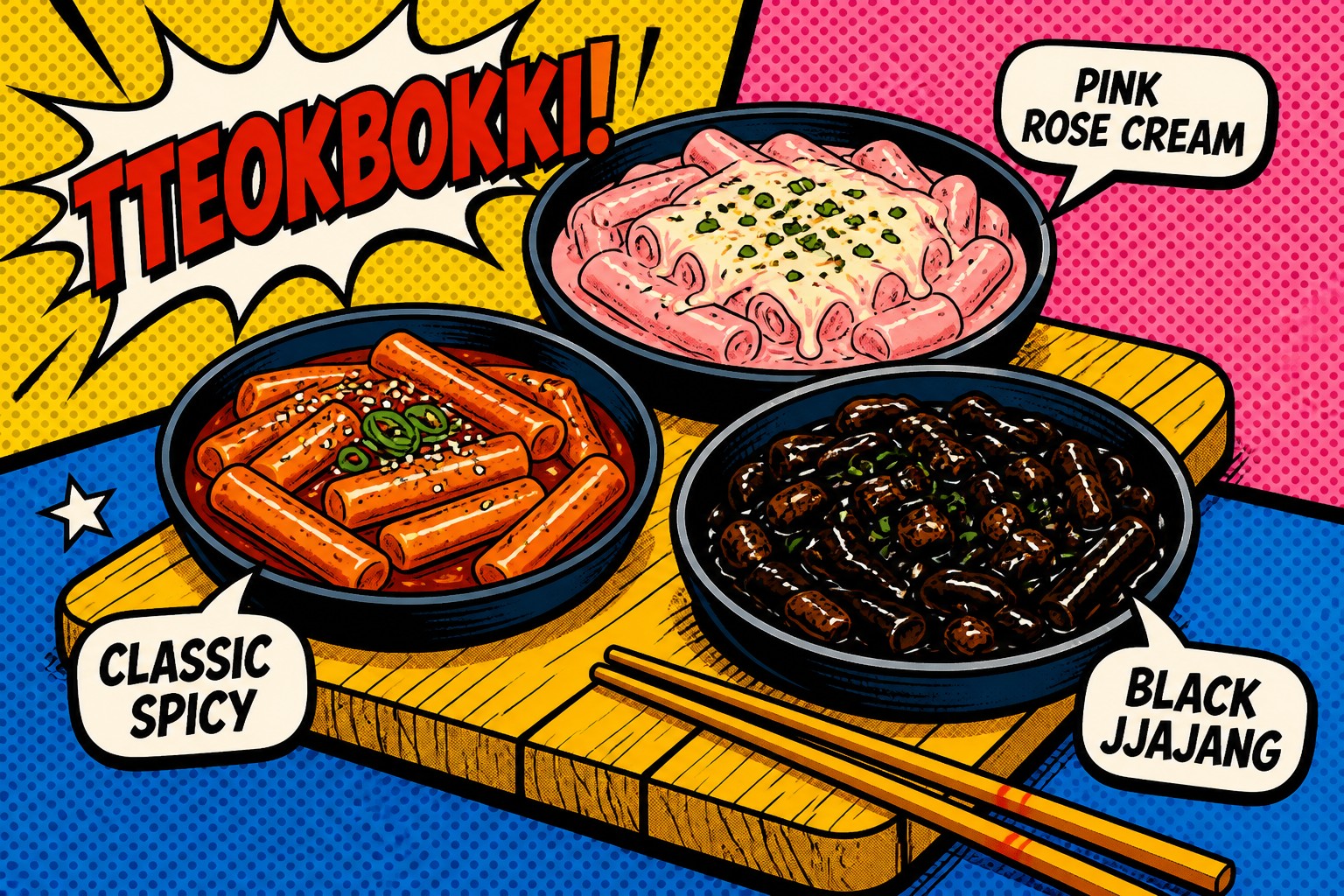
If you want the classic red bowl instead, /recipes/classic-school-tteokbokki/ is the cart. If you want cream without mala, /recipes/rose-tteokbokki-cream/. If you want no gochujang at all, /blog/tteokbokki-without-gochujang/. Styles sitting together: /blog/top-5-tteokbokki-styles-school-to-rose-to-rabokki/.
Leftovers: the tingle fades and the burn hangs around. Reheat gently with a splash of water. Do not freeze a finished mala pot; freeze plain tteok and sauce separately as in /blog/make-ahead-freezer-tteokbokki-meal-prep/. Add crisp only on the reheat.
A note on naming. You will see “mara,” “mala rose,” and “Chongqing tteokbokki” on menus. Treat them as the same idea with different dairy and heat levels. Cook one idea well. If a restaurant version was mostly cream and a chili drizzle, you wanted the rose post, not this one.
Pantry for this pot is ordinary Korean plus one Chinese-aisle tin of peppercorns. Gochujang and gochugaru shopping without fake rankings: https://kimchee.ai/blog/gochujang-gochugaru-buying-guide/. Rice cake shopping: /blog/wheat-vs-rice-tteok-for-tteokbokki/. That is enough store list. The rest is tasting as you go.
Stock strength matters more here than in a mild kids’ pot, because chili oil will sit on a thin broth and taste like a slick. Taste the strained stock before you add paste: it should be quietly savory, not fishy. If you used large anchovies without pulling the guts, it can go bitter — start over with a smaller handful. Kelp longer than twenty minutes can slime; pull it when the water smells like the sea, not like a tide pool.
Vegetable timing is the difference between a bar plate and a stew. Cabbage and onion need a minute or two so they stay sweet. Fish cake needs even less or it turns spongy. Scallion greens go on at the end. If you add potato or a lot of onion at the start, they will drink the sauce and you will chase heat with more crisp — that is how pots get muddy. Keep the add-ins few. Mala is a rice-cake dish with garnish, not a hot-pot dump.
If your tongue goes numb before you finish the bowl, you used too much pepper or the grind was coarse and you bit a hull. Next time, grind finer and start with a pinch you can still count. Serve rice. Serve something cold and unsalted — cucumber or dongchimi — not more chili. Water spreads capsaicin; fat and starch hold it. That is why a spoon of rice in the leftover sauce is a better closer than another beer, though people will still order the beer.
More Korean food
Relevant pages on the two hub sites — recipes and a BBQ directory on bulgogi.ai, street rice cakes on tteokbokki.ai.
- bulgogi.ai — recipes & BBQ directory →Marinades, cuts, and a USA Korean BBQ map.
- Rice-cake storage (tteok.ai) →Fresh vs refrigerated vs frozen garae — before you set the sauce.