RECIPES · 2026-10-05
Cheese Tteokbokki Recipe — How to Melt the Blanket Without Splitting
By Tteokbokki Curator
How to make cheese tteokbokki that still tastes like tteokbokki: a finished red pot, then mozzarella off the heat. School-style, not a fondue.
TL;DR
Cook classic sweet-spicy tteokbokki first. Sprinkle low-moisture mozzarella off the heat, cover 2 minutes or broil 90 seconds. Mix tableside. Cheese is a topping. The card is /recipes/cheese-tteokbokki-school/. Rose (cream in the sauce) is a different pot: /blog/rose-tteokbokki-recipe/.
Cheese tteokbokki is the search that means “red pot, mozzarella on top, pull for the photo.” It is still tteokbokki. The sauce should already taste good before a shred of cheese touches it. If you melt cheese into a weak, watery pot you get spicy milk with rice cakes. If you want cream cooked into the sauce, that is rose — /blog/rose-tteokbokki-recipe/ — not this page. The short card is /recipes/cheese-tteokbokki-school/.
Start with a school-style red pot. Thin cakes, gochujang, a little extra sweetness, fish cake if you have it. The first-time method is /blog/how-to-make-tteokbokki/. For cheese, pull the pot while the sauce is still a bit loose. Cheese will tighten it. A pot already reduced to paste plus mozzarella is a rubber sheet on glue.
Cheese choice is practical, not branded. Low-moisture mozzarella shreds and stretches. Fresh mozzarella in brine waters the sauce. American singles melt into a kids’ blanket and taste like cafeteria in a way some tables want on purpose. A little parmesan is a bar move, not a schoolfront move. Pre-shredded bags include starch that can make the melt dusty — fine for a weeknight, noticeable if you were shooting a pull.
Off the heat. That sentence is the recipe. Sprinkle an even layer. Cover two minutes so steam melts the cheese. Or slide under a broiler for 90 seconds if your pan allows and you want browned spots. Stirring cheese into a rolling boil splits the fat and leaves oil rings. The stretch is for the table, not for a ten-minute simmer.
Who this is for. Spice-shy eaters, kids who will try heat if it comes with a pull, late-night share pans. Who this is not for: people who wanted the 2,000-won cup with no dairy. That nostalgia is the classic card. Cheese is a different craving at a different time of day, closer to the restaurant lineage on /blog/schoolfront-vs-restaurant-tteokbokki/.
Heat math. Dairy encapsulates capsaicin. The pot will taste milder than the same sauce without cheese. If you compensated by doubling gochugaru before the melt, you may overshoot once someone mixes the blanket in. Season the red pot as you like it, then let cheese soften the edges. For a true kids’ base, start from /blog/tteokbokki-for-kids-heat-scaling/ and add the blanket at the end.
Add-ins that belong: scallion, sesame, a boiled egg cut so the yolk meets cheese. Add-ins that fight: a second cream pour (you wanted rose), a ramyun packet (you wanted rabokki), chili crisp dumped on the cheese so it never melts (you wanted mala). One idea.
Leftovers of a cheese pot are a skillet job. The cheese will not stretch again. It will brown and get tasty in a different way. Splash of water, low heat. /blog/leftover-tteokbokki/. Do not freeze this.
Pantry: the same cakes and paste as the classic pot, plus a ball or bag of mozzarella. Buying the paste: https://kimchee.ai/blog/gochujang-gochugaru-buying-guide/. Buying the cakes: /blog/wheat-vs-rice-tteok-for-tteokbokki/. Either cake works; cream and cheese hide a little overcook.
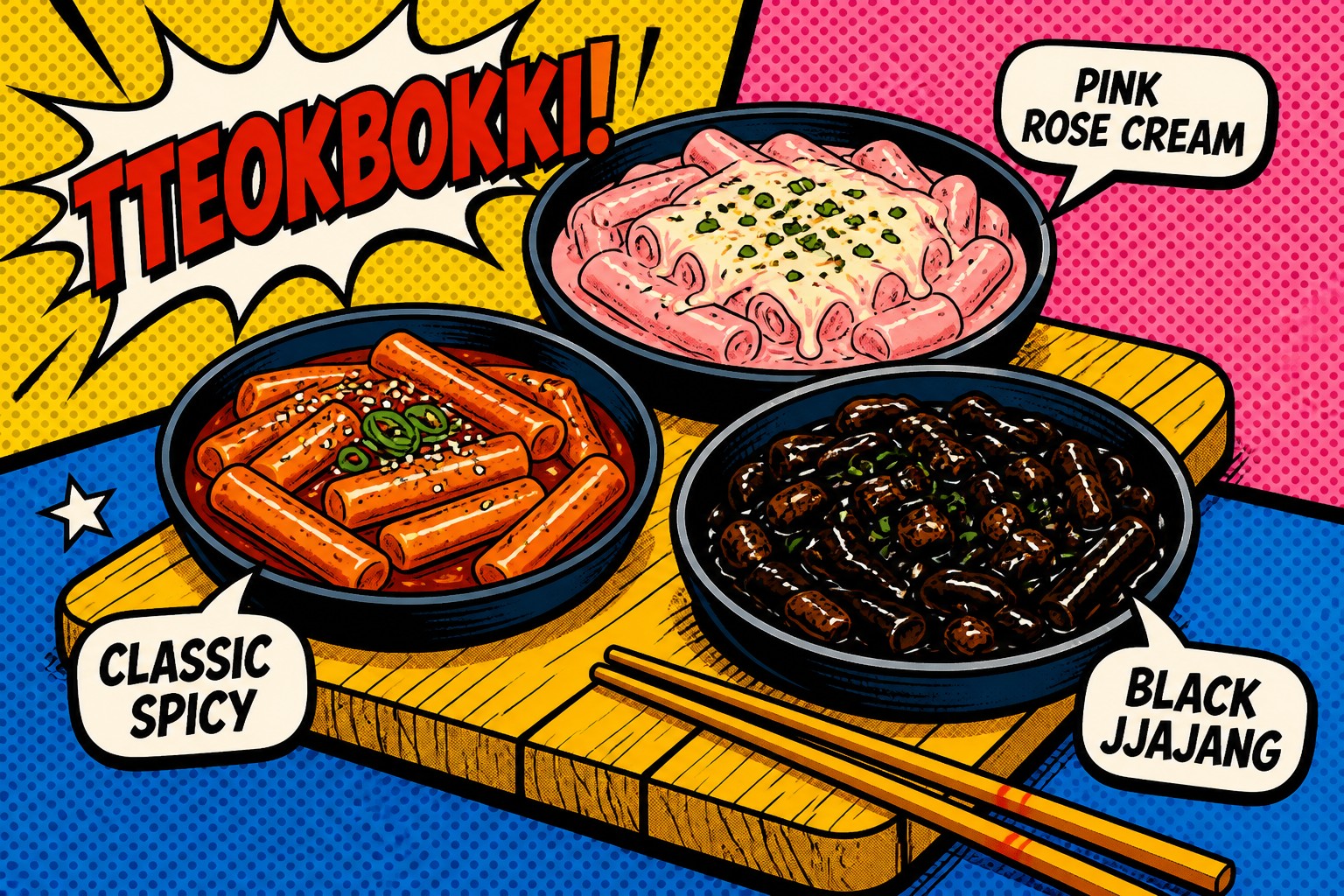
If a menu said “cheese rose,” they stacked two dairy ideas. You can do that at home — a little cream in the sauce, then a mozzarella lid — but taste the red-plus-cream before you add the lid or you will only taste dairy. If a menu said “carbonara tteokbokki,” there should be no gochujang. That pot is /blog/carbonara-tteokbokki/.
Cook the red pot once without cheese so you know it is good. Cook it once with the blanket. Write down how much mozzarella your pan actually needed. A thin even layer beats a mountain that never melts in the middle.
Pan choice matters more than brand of cheese. A wide, shallow skillet or a Korean-style jeon pan gives you surface for an even blanket. A tall saucepan melts a clump in the middle and leaves the rim bare. If you only have a tall pot, transfer the finished red tteokbokki to a skillet or an oven-safe plate before the cheese step. That one transfer is why restaurant cheese tteokbokki looks like a pizza and home cheese tteokbokki looks like a snowdrift.
Kids versus a soju table is the same blanket with different bottoms. For kids, start milder — /blog/tteokbokki-for-kids-heat-scaling/ — then cheese. For a late-night table, keep the red pot at adult heat and let dairy be the optional lid, not the whole personality. If half the table wants pull and half wants a clean red bowl, cheese only half the pan or serve shreds at the table. Do not force a blanket on people who came for schoolfront.
More Korean food
Relevant pages on the two hub sites — recipes and a BBQ directory on bulgogi.ai, street rice cakes on tteokbokki.ai.
- bulgogi.ai — recipes & BBQ directory →Marinades, cuts, and a USA Korean BBQ map.
- Rice-cake storage (tteok.ai) →Fresh vs refrigerated vs frozen garae — before you set the sauce.