METHODS · 2026-10-05
Leftover Tteokbokki — What to Do When the Cakes Turn Firm
By Tteokbokki Curator
Leftover tteokbokki is supposed to firm up. How to reheat it in a skillet, turn it into deopbap, or fold it into an egg — without microwaving a starch brick.
TL;DR
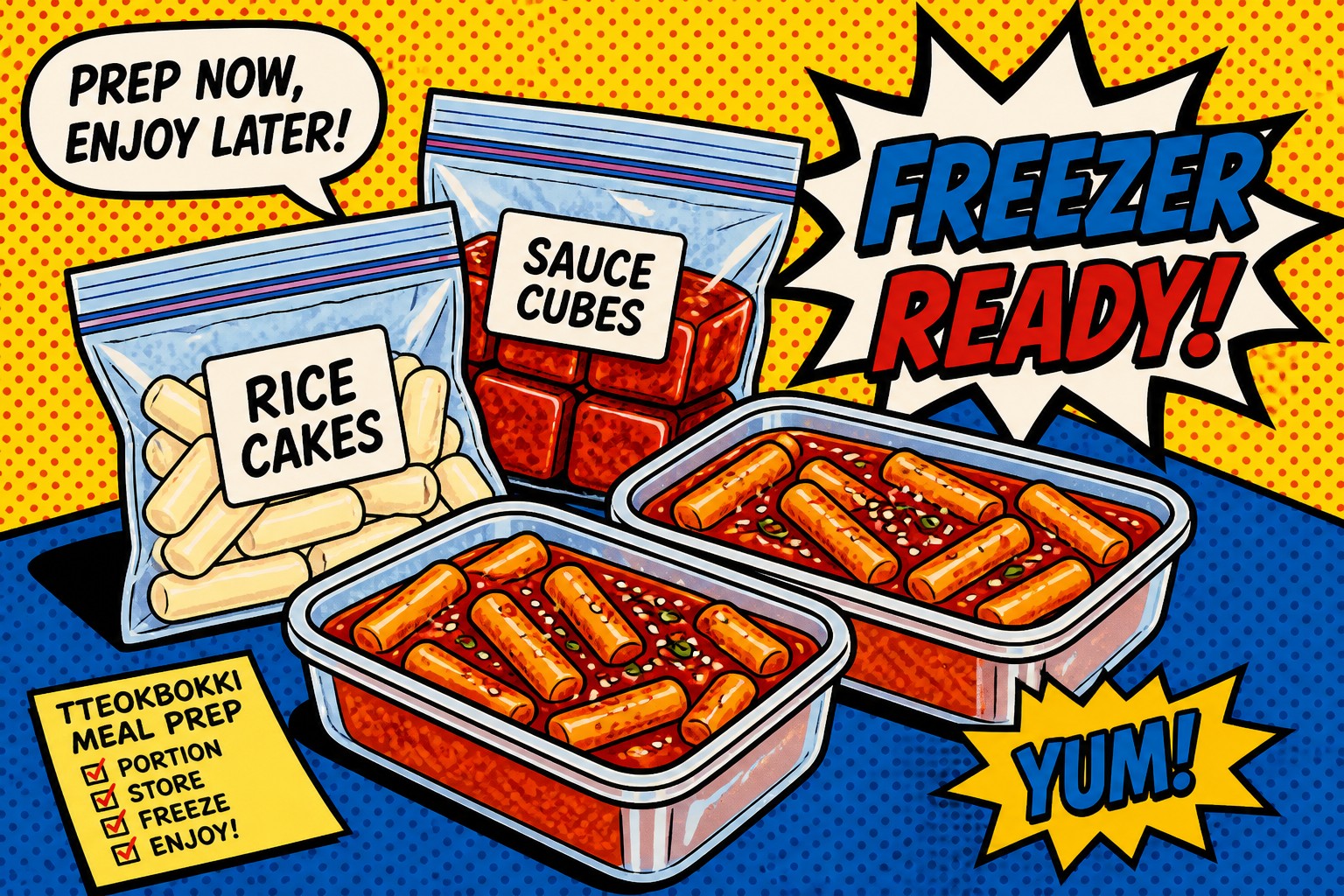
Cold leftover tteokbokki sets because starch retrogrades. Reheat in a hot skillet with a spoon of water, not a hard boil and not a dry microwave. Cream pots need lower heat. Uncooked freezer kits are a different page: /blog/make-ahead-freezer-tteokbokki-meal-prep/. The skillet card is /recipes/leftover-tteokbokki-skillet/.
People search “leftover tteokbokki” because last night’s pot is a red brick and they think they failed. They did not fail. Rice-cake starch sets as it cools. The sauce that looked glossy at the table turns tight in the fridge. Wheat-mix cakes stay springier; soft rice cakes can feel like erasers. That physics is the same reason leftover rice fries better than leftover risotto. This page is what to do with a cooked pot. It is not how to freeze uncooked kits — that is /blog/make-ahead-freezer-tteokbokki-meal-prep/.
Do not microwave a solid block on high and walk away. The outside turns tough, the sauce separates into oil and paste, and the center stays cold. If you must use a microwave, loosen with a tablespoon of water, cover, and use short bursts, stirring between. A skillet is kinder and faster once the pan is hot.
Skillet method. Cut the leftover if it is one glued slab. Heat a film of oil until a drop of water skips. Lay the leftover in. Let one face blister before you stir — that is the chew coming back. Add 2–3 tablespoons of water or stock around the edge. Toss as the sauce loosens. If it still looks like paste, another spoon of water, not another spoon of gochujang. The card is /recipes/leftover-tteokbokki-skillet/.
Egg is the honest second meal. Make a well, scramble softly, or leave a yolk. Scallion. Sesame. That is lunch. Cheese only off the heat, same rule as /recipes/cheese-tteokbokki-school/. A handful of cabbage wilted in the same pan gives you a vegetable without cooking a new pot.
Deopbap: leftover tteokbokki over hot rice. The rice dilutes heat and drinks leftover sauce. Pack rice and leftover separately if this is a lunchbox; combine when you eat or the rice turns pink and soggy by noon. A fried egg on top is not fusion. It is how leftover spicy food gets eaten in a lot of kitchens.
Rose and carbonara leftovers are dairy pots. They split if you boil them. Low heat, splash of stock or milk, stop when it looks saucy again. The pink will dull. The flavor is still there. Do not freeze a finished cream pot and expect a second rose. Freeze components; add cream the night you eat. Rose method: /blog/rose-tteokbokki-recipe/. Carbonara: /blog/carbonara-tteokbokki/.
Rabokki leftovers are the worst case because the noodles keep swelling in the fridge. Eat those the same night if you can. Next-day rabokki is a skillet fry with extra water and lowered expectations — the noodles will not be springy. Next time, cook noodles only for the bowls you will finish. The timing page is /blog/rabokki-ramen-tteokbokki-hybrid/.
Mala leftovers lose the tingle and keep the burn. Reheat gently. Do not add more chili crisp until you taste; yesterday’s heat blooms again as it warms. /blog/mala-tteokbokki-recipe/.
What not to do. Do not add a fresh bag of unsoaked cakes to yesterday’s tight sauce and hope they cook evenly. The old cakes will be porridge while the new ones are chalk. Do not thin a leftover pot with more gochujang. Do not serve leftover sundae that sat in sauce overnight as if it were a new combo plate — the sausage soaks and the contrast dies. /recipes/sundae-tteokbokki-combo/ is a same-night plate.
Wheat versus rice shows up more on day two than day one. Wheat-mix leftovers take a skillet and a spoon of water and taste close to last night. Soft rice leftovers are better fried or baked under a little cheese than returned to a wet pot. If you knew you would have leftovers, you should have undercooked by a minute and held extra sauce separately. You cannot time-travel. You can cook the next pot that way.
Food safety without theater. Fridge within two hours. Eat within two days. Reheat until steaming. We are not dating a leftover for a week because “fermented chili is preservative.” It is dinner, not kimchi.
If you are meal-prepping on purpose, stop cooking finished pots to reheat. Freeze dry cakes, freeze sauce, assemble fresh. That is the other page. This page is the honest Tuesday after a too-big Sunday pot. Cook the skillet. Eat it over rice. Move on.
A leftover that still tastes good cold is usually a soy or cream-garlic pot, not a schoolfront red. Gungjung reheats like a stir-fry: splash of water, hot pan, sesame at the end. /recipes/gungjung-tteokbokki-royal-soy/. Cream-garlic: /recipes/cream-garlic-tteokbokki/. Different leftover, different pan, same rule — loosen, do not boil to death.
Lunchbox packing is the leftover question people ask after the skillet. Pack cakes and sauce in a shallow box, not a tall jar, so they reheat evenly. Keep rice separate. Keep pickle separate. A microwave at work is the hostile version of last night’s pot: add a spoon of water, cover, 45 seconds, stir, 30 seconds. If the office microwave is a war crime, eat it closer to room temp over rice and call it deopbap. It will not be the cart. It will be lunch.
When leftover is not worth saving. If the cakes have gone sour, if dairy has split into a grainy slick you cannot stir back, or if the pot sat out overnight, compost it. A new 15-minute pot from a sauce jar and soaked cakes is cheaper than a stomach ache. The jar is /recipes/tteokbokki-sauce-from-scratch/. The first-time method if you threw the leftover away and still want the dish is /blog/how-to-make-tteokbokki/.
More Korean food
Relevant pages on the two hub sites — recipes and a BBQ directory on bulgogi.ai, street rice cakes on tteokbokki.ai.
- bulgogi.ai — recipes & BBQ directory →Marinades, cuts, and a USA Korean BBQ map.
- Rice-cake storage (tteok.ai) →Fresh vs refrigerated vs frozen garae — before you set the sauce.