METHODS · 2026-08-08
How to Make Tteokbokki Sauce from Scratch (Gochujang Balance)
By Tteokbokki Curator
A from-scratch tteokbokki sauce: gochujang, gochugaru, soy, rice syrup, and anchovy-kelp stock — glossy and clingy, not just hot.
TL;DR
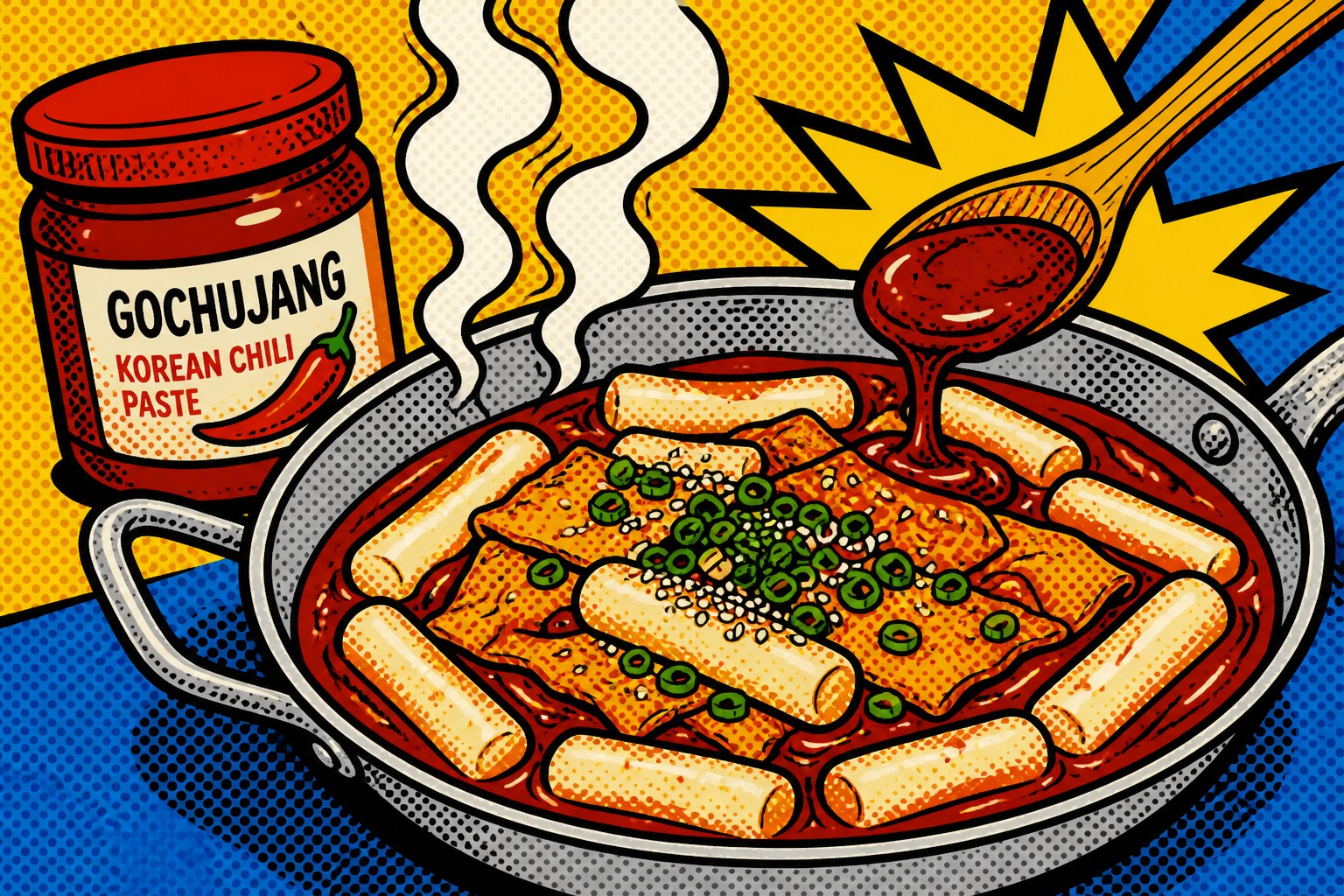
Start from 3 Tbsp gochujang, 1 Tbsp gochugaru, 2–3 Tbsp sugar or rice syrup, 2 Tbsp soy, and 500 ml anchovy-kelp stock. Bloom the paste off a hard boil, let the cakes thicken the pot, and pull while the sauce still looks slightly loose. The recipe jar lives at /recipes/tteokbokki-sauce-from-scratch/.
Great tteokbokki sauce tastes like sweet-savory with heat, not heat with a little sweet. People who search “tteokbokki sauce” or “how to make tteokbokki sauce from scratch” usually have the cakes already and a sad jar of ketchup-plus-chili. Start from 3 tablespoons gochujang, 1 tablespoon gochugaru, 2–3 tablespoons sugar or rice syrup, 2 tablespoons soy, and 500 ml anchovy-kelp stock. The stock is half the dish. Water alone leaves the sauce flat and one-note spicy. A jarred concentrate you can make ahead is /recipes/tteokbokki-sauce-from-scratch/. This page is the pot method and the why.
Blooming matters. Simmer stock with dried anchovies (guts pulled if they are large), a square of kelp, and a dried shiitake for 15 minutes at a lazy bubble, then strain. Whisk in gochujang off a hard boil so it dissolves instead of scorching. Add gochugaru after the first simmer to keep its color bright rather than brown. That order is why restaurant tteokbokki glows red. The stock essay is /blog/fish-cake-eomuk-stock-secrets/. Vegetarian cooks use more shiitake and kelp and skip the fish — that path is written out on /blog/vegan-tteokbokki/.
Rice cakes hydrate before they cook. Soak refrigerated garae-tteok 15–20 minutes in warm water so they puff then braise rather than seize; frozen cakes need a full 30-minute soak. If your tteok splits or tastes chalky in the center, it was under-soaked, not undercooked. Do not “fix” a chalky cake by adding more paste. Wheat-mix versus pure rice changes how fast the pot thickens — /blog/wheat-vs-rice-tteok-for-tteokbokki/ is the shopping decision, not this page.
Thickening is starch, not flour. Let the tteok itself thicken the sauce as it simmers 8–12 minutes. Add a tiny starch slurry only if you used pre-cooked or low-starch imported cakes that never shed. Over-reduction dulls aroma and turns the pot into candy glue. Pull while it still looks slightly loose; it will tighten off-heat and again in a takeout box. If you reduced too far, a splash of stock — not more gochujang — brings it back.
Sugar and heat are different knobs. Extra gochujang makes a pot sweeter and thicker before it makes it hotter, because most grocery tubs are fermented chili plus grain sweetener. Extra gochugaru (bloomed, not dumped raw) is how you climb heat. Rice syrup (yeot) adds shine and a brief chew on the teeth that white sugar misses. Past about 3 tablespoons sweetener per 500 ml stock you are making dessert. Kid-heat lives on /blog/tteokbokki-for-kids-heat-scaling/; lava-heat lives on /blog/extra-spicy-tteokbokki/.
Finish with sesame oil and scallion after the flame is off. A teaspoon of butter at the end deepens gloss without greasiness, especially if the pot will sit. Cheese is a topping, not the sauce — /blog/cheese-tteokbokki-recipe/ and /recipes/cheese-tteokbokki-school/. Cream stirred into this red base is rose, a different dish: /blog/rose-tteokbokki-recipe/. Do not add all three ideas to one Tuesday pot.
What this sauce is for. The street-cart bowl is /recipes/classic-school-tteokbokki/ and the longer first-time method is /blog/how-to-make-tteokbokki/. Rabokki wants the same sauce slightly brothier. Skewers want it reduced thicker so it brushes. A store kit is a different starting point — /blog/tteokbokki-kits-how-to-use/ — and you can still use this ratio to rescue a salty packet.
Pantry without fake rankings. Buy gochujang and gochugaru the way the fermentation hub tells you: https://kimchee.ai/blog/gochujang-gochugaru-buying-guide/. Cylinder cakes, not soup ovals. Fish cake if you want the cart plate. Anchovies and kelp if you want stock that tastes like cooking. We leave Amazon search links untagged until the network tag is set; empty is correct.
A weeknight shortcut that is still from scratch: mix the paste, flakes, soy, and syrup in a jar (the recipe card), keep stock in the freezer in 500 ml bricks, and you are twelve minutes from a pot once the cakes have soaked. That is not a kit. That is mise. Leftover finished sauce-on-cakes is a different problem — starch sets overnight — and belongs on /blog/leftover-tteokbokki/, not in this pot on night one.
If the sauce tastes like ketchup, you used ketchup as the body or you skipped stock. A spoon of ketchup can tint a kids’ pot. It cannot replace fermented chili paste. If you are out of gochujang on purpose, do not invent a fake substitute here — fork to /blog/tteokbokki-without-gochujang/ and cook soy or cream-garlic as their own dishes.
Taste at minute six and minute ten. Write down what your tub of paste did. Darker, saltier brands need less soy and less added sugar. Sweeter grocery tubs need the full gochugaru spoon or the pot reads as candy. The second batch is faster than rereading this. The point of a long sauce page next to a short card is that you only need the long page once.
More Korean food
Relevant pages on the two hub sites — recipes and a BBQ directory on bulgogi.ai, street rice cakes on tteokbokki.ai.
- bulgogi.ai — recipes & BBQ directory →Marinades, cuts, and a USA Korean BBQ map.
- Rice-cake storage (tteok.ai) →Fresh vs refrigerated vs frozen garae — before you set the sauce.